
Guaranteed Next Day Delivery!
Why You Can’t Put Asbestos in a Skip Bin and What to Do Instead
Planning a renovation or demolition? A skip bin can make it easier to manage most household, building and renovation waste, but asbestos needs to be handled differently. Asbestos cannot go in a standard skip bin and must only be removed, packaged, transported and disposed of through approved asbestos waste processes.
Knowing how to handle asbestos waste safely and legally helps protect your health, avoid costly fines, and prevent asbestos fibres from contaminating your property, neighbouring areas or waste facilities.
This guide explains why asbestos is one of the most strictly controlled waste materials in Australia, how to dispose of asbestos waste correctly, and what other hazardous materials need special care during a clean-up.
What Makes Asbestos So Dangerous?
Asbestos is one of the most tightly regulated hazardous materials in Australia. When asbestos-containing materials are disturbed, they release microscopic asbestos fibres into the air, creating severe health risks for anyone nearby, including neighbours and waste-collection workers.
Inhaling asbestos fibres causes serious and often fatal lung conditions:
- Mesothelioma – A rare, aggressive cancer linked almost exclusively to asbestos exposure.
- Lung cancer – Asbestos exposure significantly increases lung cancer risk.
- Asbestosis – Chronic lung scarring causing progressive breathing difficulties.
- Pleural thickening – Stiffening of the lung lining that restricts function.
Symptoms can take 15 to 40 years to surface. There is no safe level of exposure, which is why asbestos disposal carries strict legal obligations across Australia.
Why It’s Illegal to Put Asbestos in a Skip Bin
Asbestos is strictly regulated due to its severe health risks, which is why it is illegal to dispose of asbestos in an uncovered skip bin or any skip bin that is not approved to hold asbestos. In New South Wales, illegal dumping penalties can be severe. The NSW Government increased maximum penalties for the most serious illegal dumping offences to $500,000 for individuals and $2 million for corporations, with even higher penalties applying where asbestos waste is involved. Serious offences may also lead to prosecution.
Dust from uncovered bins can blow out and risk the health of neighbours and waste-collection workers. Any skip bin load containing asbestos will be rejected at waste facilities, leaving you responsible for the cost.
Before it can be legally transported, asbestos must be double-wrapped in heavy-duty plastic and labelled clearly, then taken only to a licensed landfill registered to accept hazardous waste.
How to Get Rid of Asbestos Waste
The safest and most common way to dispose of asbestos is to hire a licensed asbestos removal company. In NSW, a licensed asbestos professional must be used for friable asbestos, or when removing more than 10m² of bonded asbestos. SafeWork NSW recommends using a licensed professional for any amount of asbestos due to the health risks and strict handling, transport and disposal requirements.
Two licence types cover asbestos removal:
- Class A – Required for friable asbestos and can also cover bonded asbestos removal.
- Class B – Required for licensed removal of more than 10m² of bonded asbestos, such as asbestos cement sheeting in older homes.
Contractors manage containment, removal, transport and disposal requirements, following protocols from SafeWork NSW and the NSW Environment Protection Authority. Asbestos waste must only be taken to a landfill licensed to accept it, and disposal facilities should be contacted in advance to confirm their asbestos waste requirements.
Steps to Safely Remove and Dispose of Asbestos
- Don’t disturb it. Leave intact material alone until a professional assesses it.
- Book an inspection. A licensed professional can confirm the asbestos type present.
- Hire a fully licensed removalist. They safely contain, remove, and transport the material.
- Confirm the disposal site. Only designated waste facilities can legally accept asbestos waste.
How Long Does Asbestos Dust Stay in the Air?
Asbestos fibres can remain airborne for hours or even days. They are microscopic and don’t settle like ordinary dust, they travel widely in air currents. This is why asbestos removal requires sealed containment and specialist filtration, not a standard skip bin.
How Much Does Sydney Charge for Asbestos Dumping?
There is no fixed government rate for asbestos dumping in Sydney. Licensed waste facilities in NSW set their own fees based on the volume of waste, asbestos type, packaging requirements and the disposal facility used, so costs can vary.
Asbestos waste must only be taken to a landfill licensed to accept it, and the facility should be contacted in advance to confirm its requirements. Improper asbestos disposal and illegal dumping can lead to serious penalties. In NSW, maximum penalties for the most serious illegal dumping offences have increased to $500,000 for individuals and $2 million for corporations, with even higher penalties applying where asbestos waste is involved. Serious offences may also result in court action.
Contact a licensed asbestos removalist or approved waste facility for disposal costs specific to your project.
Other Hazardous Waste That Can’t Go in a Skip Bin
Asbestos isn’t the only hazardous waste banned from skip bins. Certain items are prohibited across all waste types — general waste, green waste, concrete, mixed waste, and soil bins alike.
Paint Cans and Chemicals
Paint cans, solvents, thinners, and oils are hazardous materials. Paints, batteries, chemicals, and gas bottles must go to certified hazardous waste facilities — never in a skip bin. You can recycle many of these chemicals safely at Household Chemical CleanOut events — check your local council website for upcoming collection points.
Gas Bottles
Gas bottles are dangerous and cannot go in any skip bin. They can be returned to hardware stores for exchange or dropped off at authorised council collection points. If unsure, contact your local council.
E-Waste and Electronics
Computers, televisions, batteries, and old appliances are classified as e waste. Customers should recycle e-waste at council-run facilities or major retail stores offering recycling services rather than placing these items in a skip bin. Disposing of e-waste and chemicals incorrectly can breach state, territory or council waste rules and may harm the environment.
Medical Waste
Medical waste disposal services are required for sharps, expired medications, and clinical waste. Medical waste cannot go in a skip bin under any circumstances. Contact a registered medical waste disposal services provider or your local council for guidance.
Tyres
Tyres are generally not accepted in standard skip bins and should be returned to tyre retailers, mechanics, or council-run tyre recycling programs.
What Can You Put in a Skip Bin in Australia?
Once hazardous items are set aside, skip bins handle the majority of residential and commercial waste. Here are the main waste types:
General Waste
General waste bins accept household items, cardboard, furniture, white goods, and timber — ideal for house clean ups and general household rubbish.
Green Waste and Garden Waste
Green waste bins handle garden waste: clippings, shrubs, branches, and leaves. Green waste is typically recycled into mulch or compost.
Concrete, Bricks, and Heavy Materials
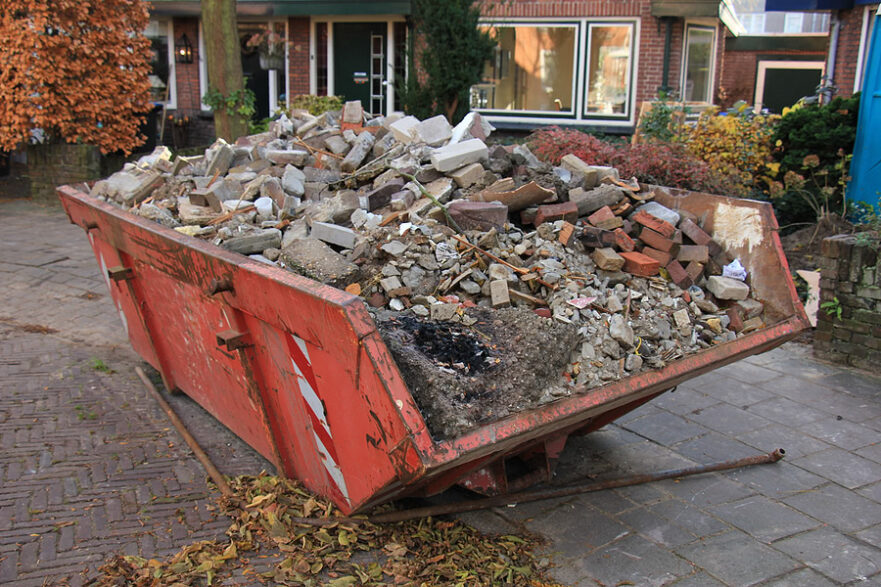
Concrete, bricks, tiles, and pavers from demolition waste require a dedicated heavy skip bin. These heavy materials cannot go in a general waste bin.
Soil and Clean Fill
Clean fill, uncontaminated soil, goes in a dedicated soil bin. If unsure whether your soil qualifies as clean fill, check with your supplier.
Mixed Waste
Mixed waste bins handle demolition waste from renovations, treated timber, bricks, concrete, household items, and green waste. For larger jobs, you may need multiple bins to correctly separate waste types.
How to Book a Skip Bin Through Skip Bin Finder
Skip bin hire through Skip Bin Finder is straightforward. Whether you need bin hire for a single weekend or a multi-week project, here’s how it works:
- Separate your waste — Set aside asbestos waste, hazardous waste, and all prohibited items first.
- Choose your bin size — From 2m³ mini bins to 30m³ hook lifts, we’ll help you find the right bin.
- Compare prices free — Our quoting tool connects you with fully licensed suppliers, with prices updated daily.
- Book online or by phone — Next-day delivery guaranteed across Melbourne, Sydney, Brisbane, Adelaide, and Perth.
Call us on 1300 491 772 or compare and book online now.
Frequently Asked Questions
How long does asbestos dust stay in the air?
Asbestos fibres can remain airborne for hours or even days. They are microscopic and don’t settle like ordinary dust, creating ongoing health risks without proper containment.
How to get rid of asbestos waste?
Hire a fully licensed removalist. They will contain, remove, and legally transport asbestos waste to a licensed landfill.
What can you put in a skip bin in Australia?
General household rubbish, furniture, cardboard, timber, green waste, garden waste, concrete, bricks, clean fill, and mixed demolition waste can go in the correct skip bin type. You cannot dispose of asbestos, e-waste, paint cans, gas bottles, chemicals, tyres, or medical waste in any skip bin; recycle or dispose of these materials through certified waste facilities or your local council. See Skip Bin Finder’s waste types page for a full breakdown.
How much does Sydney charge for asbestos dumping?
There is no fixed asbestos dumping fee across Sydney. Licensed waste facilities in NSW set their own fees, which can vary based on the amount of asbestos, the type of asbestos waste, packaging requirements and the disposal facility used. Asbestos waste must only be taken to a landfill licensed to accept it, and you should contact the facility in advance to confirm their requirements.
Improper asbestos disposal and illegal dumping can lead to serious penalties. In NSW, the maximum penalties for the most serious illegal dumping offences have increased to $500,000 for individuals and $2 million for corporations, with even higher penalties applying where asbestos waste is involved. Serious offences may also result in court action.
Contact a licensed asbestos removalist or an approved waste facility for disposal costs specific to your project.